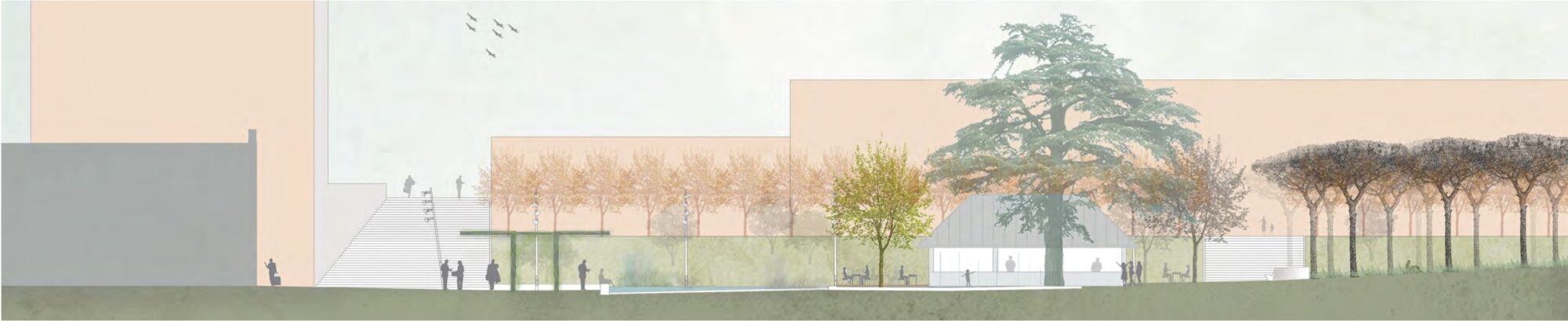
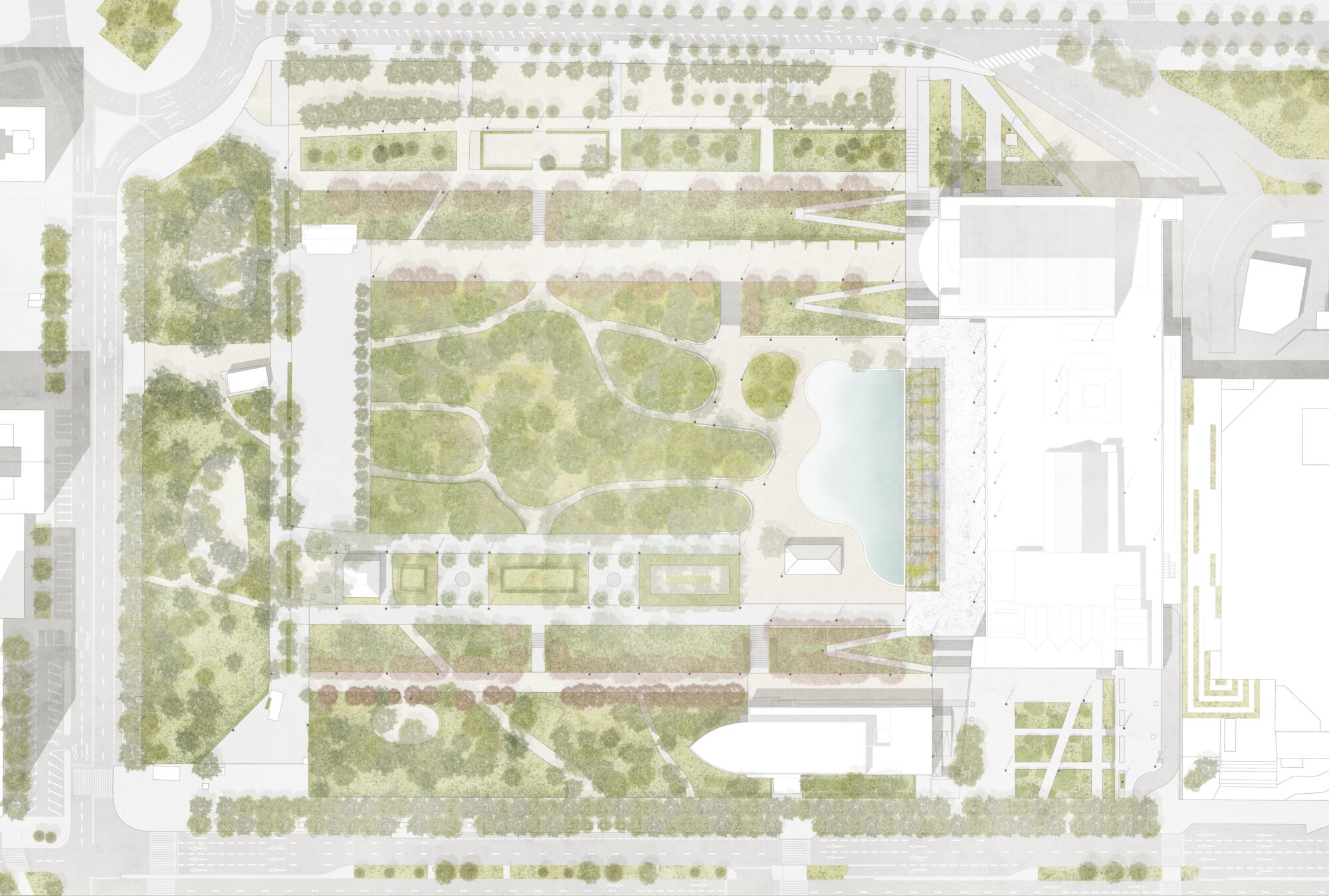
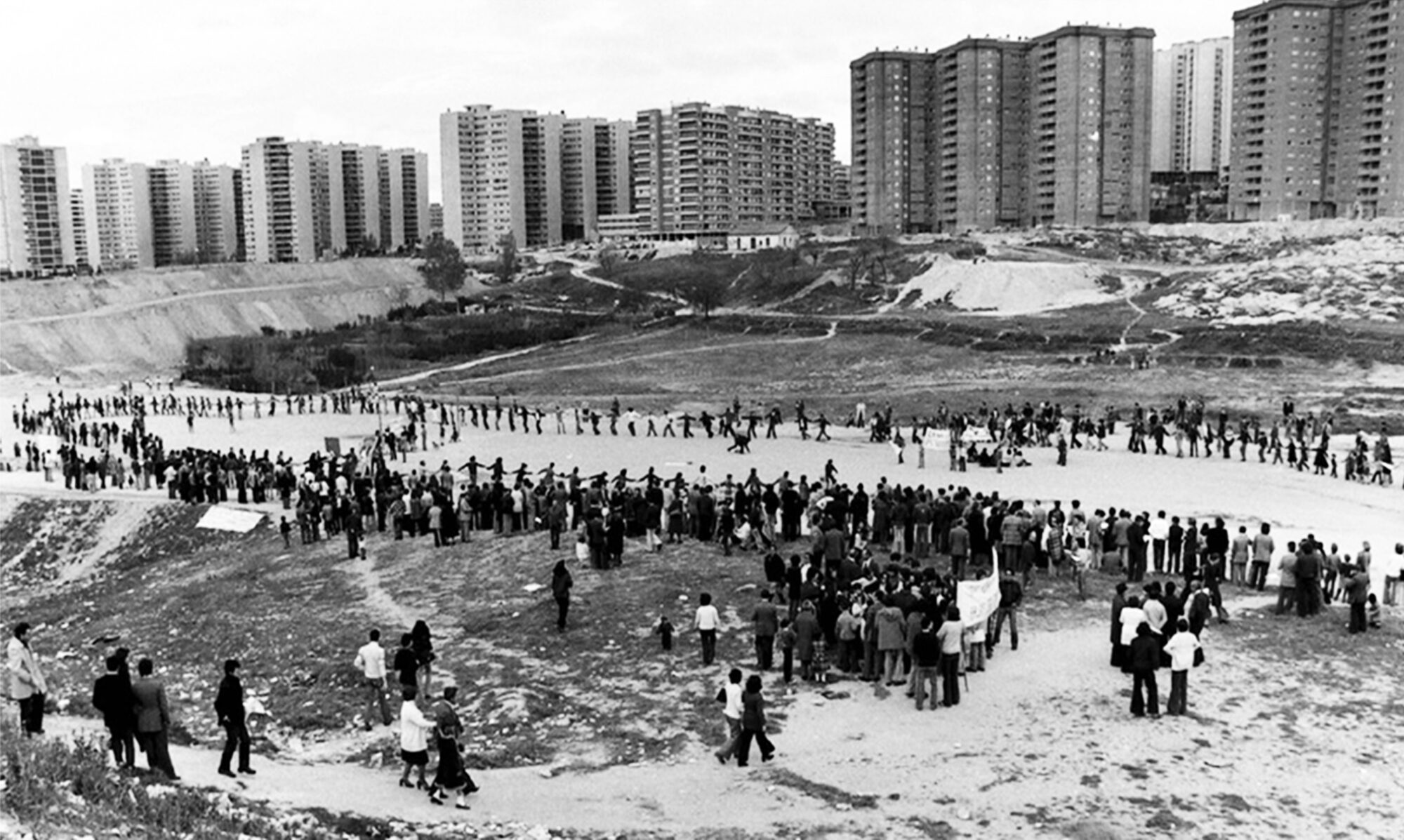
The Vaguada Park, which was created as a green space for neighborhood enjoyment thanks to the local movement "La Vaguada es Nuestro". Now, after about thirty years of its existence, the park needs a general review and some partial rehabilitation to become the main intergenerational meeting point of the bustling Barriada del Pilar.
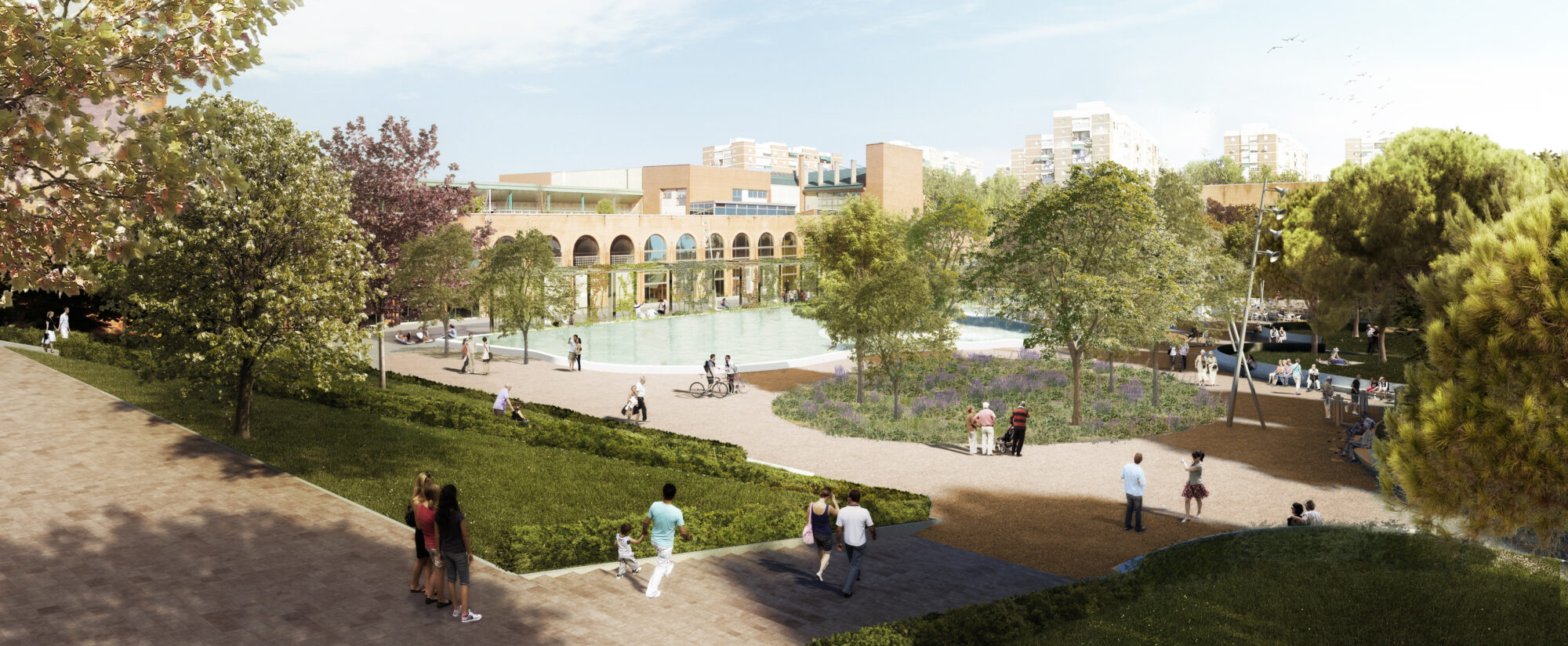
The sunken position of the space around the pond, a landscape-esque memory of a small valley, allows for retreat and isolation from the metropolitan noise of the busy surrounding avenues. The concentration of water at the lowest point, a logical position in a valley, allows for calm contemplation and reflection of the classical arcade of the multifunctional public building. The pine forest with its winding paths transports the visitor to a natural environment far from the daily stress of the city. All these values, inherent in the original design of the park, are what need to be highlighted and complemented with uses and a contemporary language that rejuvenates this space.

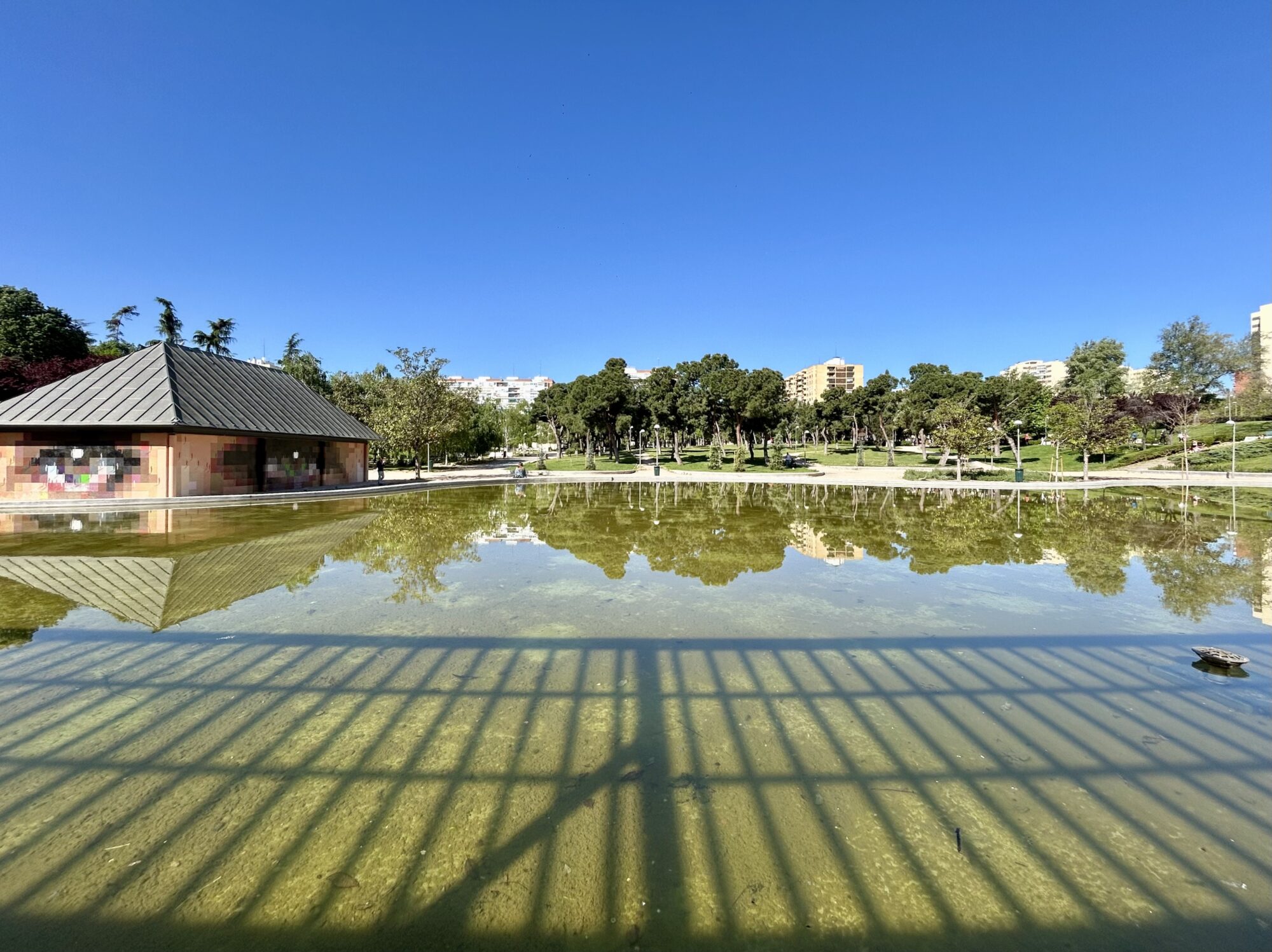
As the name of the park itself indicates, the public space in question is located in what was once part of a ravine, through which the Veguilla stream flowed. The urbanization and growth of our cities, as is the case with Madrid, gradually "cover" or eliminate the original traces that defined the landscape. Only through the pond does the water remain present, in a landscape that was once shaped and characterized by its presence. It is for this reason that water forms part of, and must continue to form part of, the identity and the cultural landscape of this public space.
"Naturnah" is a German term that means "close to nature". This was the adjective that defined the proposal which suggested a rehabilitation of the pond area in the Vaguada Park. Adopting a contemporary formal language, moving away from the rigidity and classicism of the architecture that presides over the scene, the aim was to integrate the pond area into a park with organic forms that extends to the esplanade of the pavilion through the pine forest.
The new pond closes off the rectangular square providing access to the various facilities, and gradually takes on organic forms that interact with the masses of pine trees descending. It has a sustainable purification system for its maintenance, keeping the water crystal clear and free from algae and unpleasant odors.
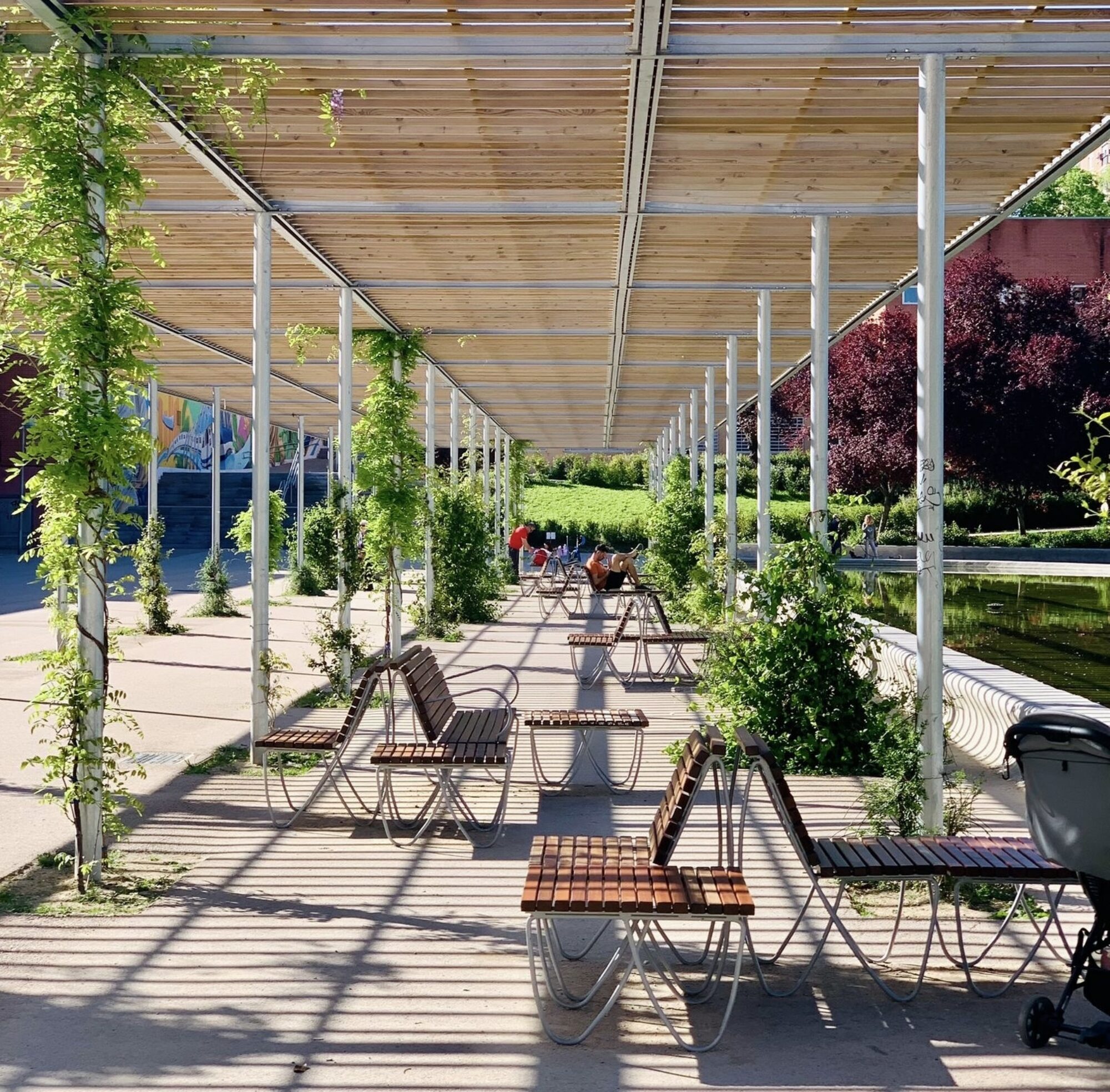
The edge of the pond is made of white concrete and gradually increases in height due to the slight slope of the terrain until it forms a continuous bench to sit in the shade of a new pergola. At its upper part, it widens to create a surface reminiscent of a drop of water, where water fountains are installed. This slightly concave surface with a slope towards the pond allows for the compensation of water losses caused by evaporation, while also providing a play area where children can bathe during the summer months.
The entire operational surface is paved with porous concrete, which drains rainwater, feeding the urban subsurface. At the same time, thanks to it's light color, the concrete pavement absorbs light and stores less heat from solar radiation, thus reducing the heat island effect. The concrete surface features an island, offering space for a children's play area, which is covered with wood chips as protective fall flooring. Several smaller islands, also covered with wood chips, are planted with deciduous trees, which provide shade during hot seasons and allow sunlight to pass through in winter.
The existing pavilion next to the pond is rehabilitated to house a café where people can meet on sunny days. A wooden platform extends into the pond, offering a privileged view where one can have a coffee, or simply lie in the sun. The winding paths that descended through the pine forest are completed by closing it off with organic shapes.
Curved benches multiply the shaded bench areas. The gym equipment is moved next to these curved benches, from where parents and grandparents will be able to observe how their little ones play. New ramps provide access for people with reduced mobility from the Vaguada promenade, completing the access to the future remodeled theater, and from Monforte de Lemos Avenue, opening up to the Pilar neighborhood and facilitating access from the shopping center.