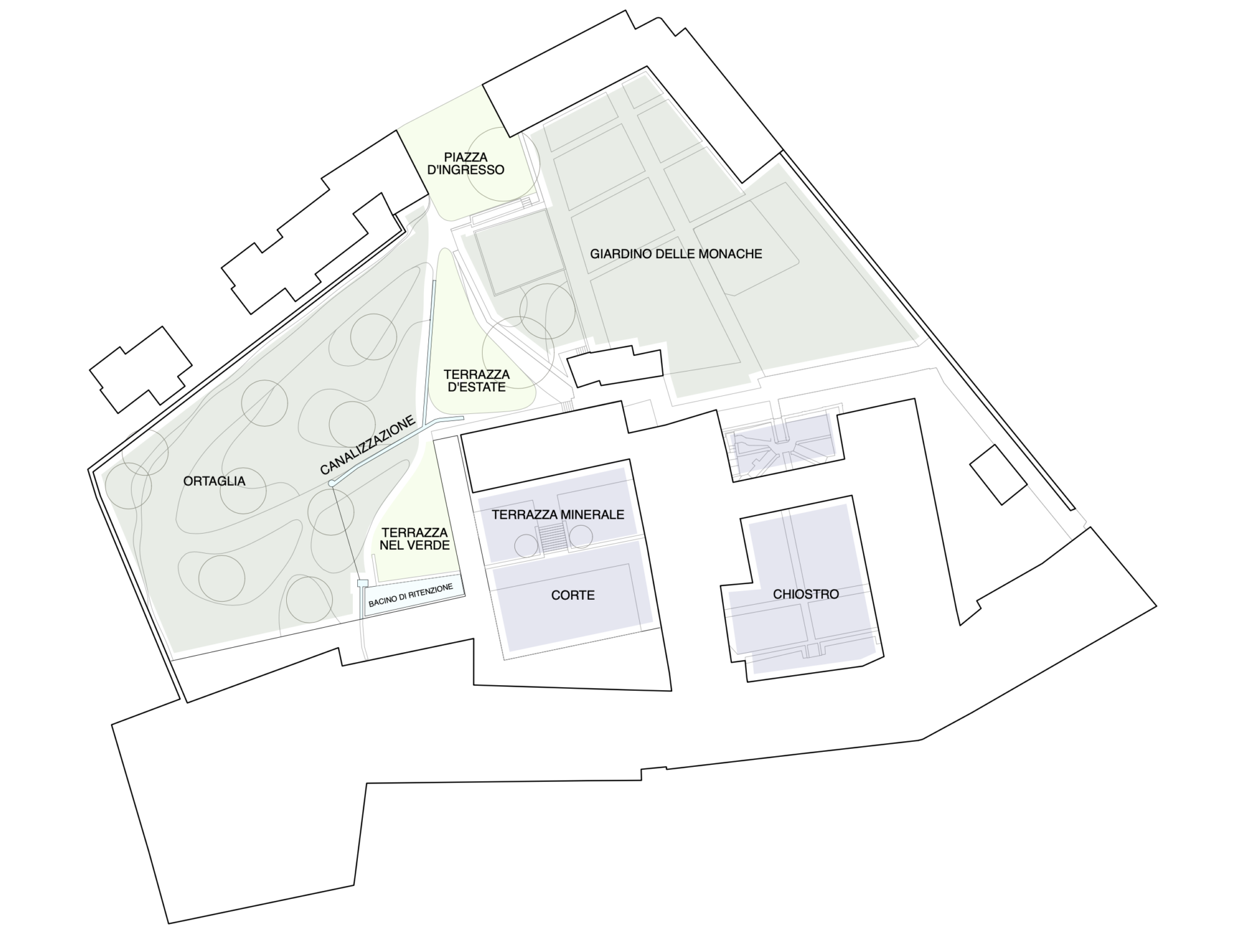
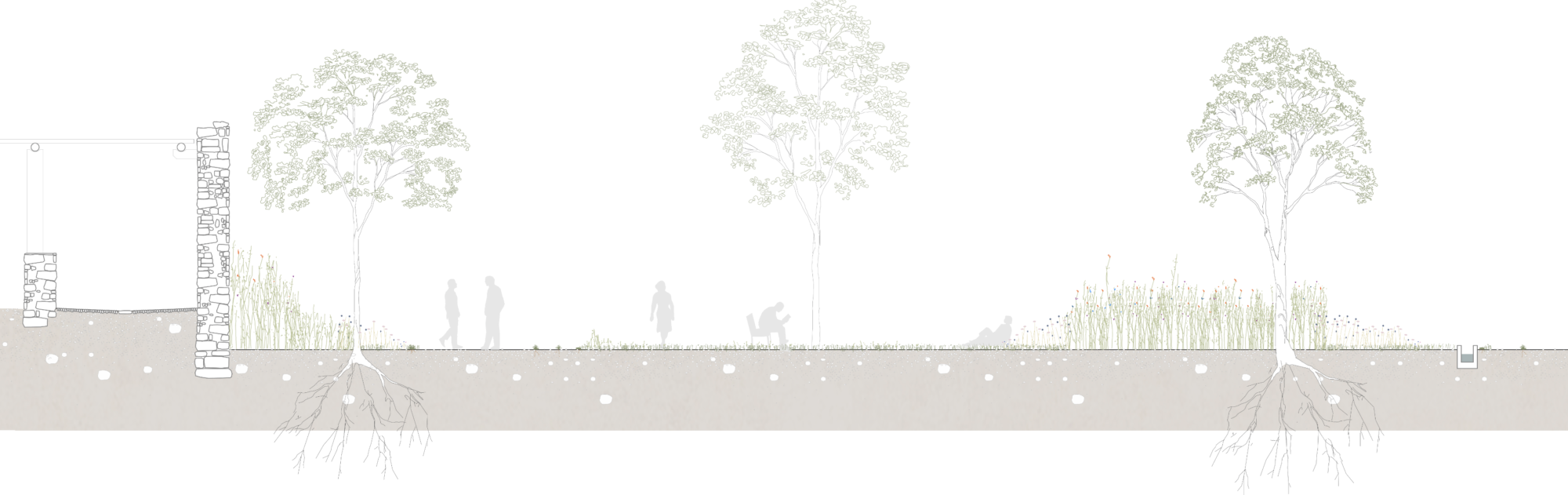
Keeping with the spirit of the urban and architectural design, the landscape proposal aims to preserve the genius loci in the convent’s green spaces: the vegetable garden and the nuns’ garden is therefore restored, returning them to their original function.
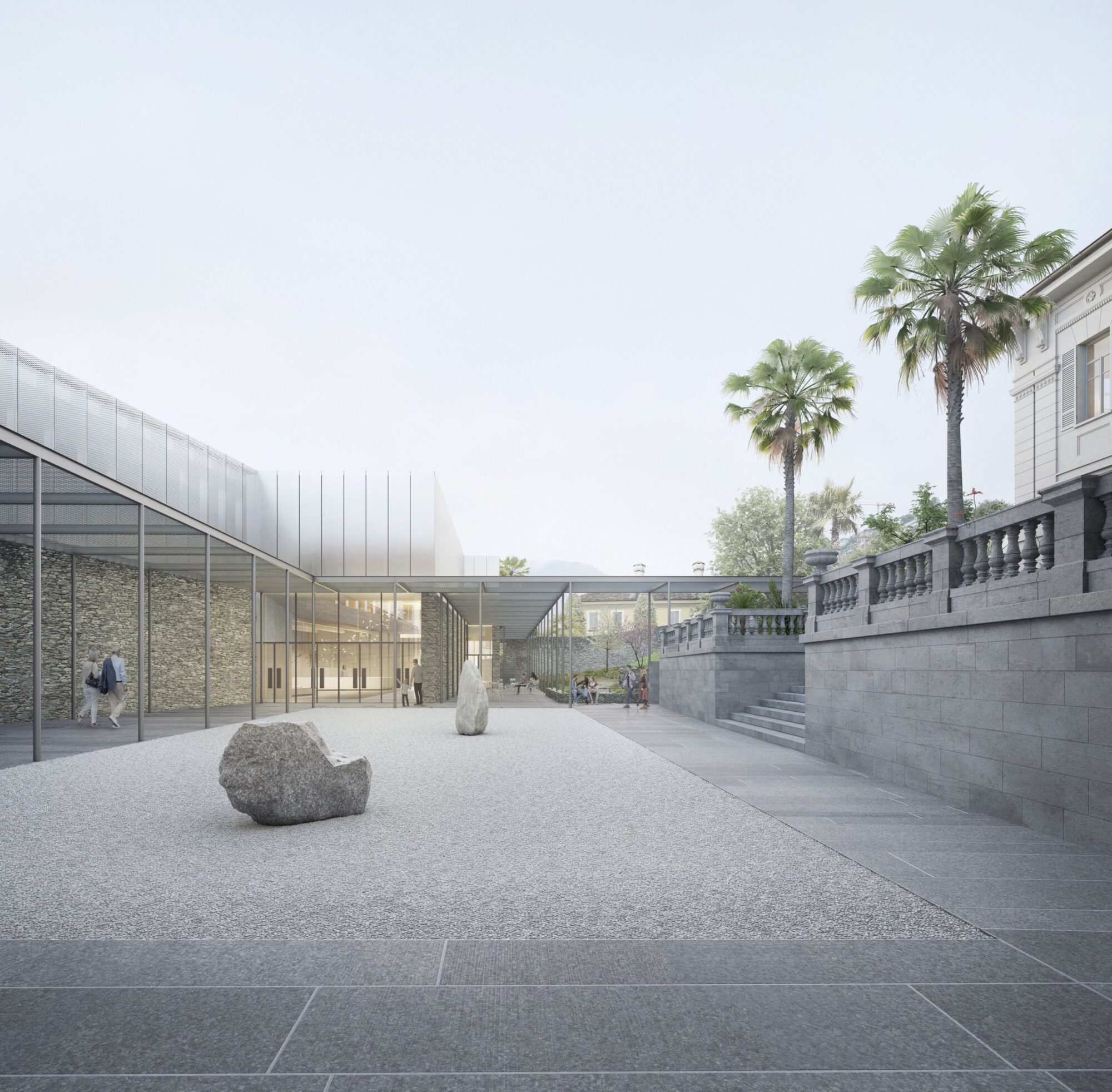
The pergola, a distinctive feature of Ticino’s rural architecture, which farmers used as a support for their vineyards and in whose shade they sat on hot summer days, is revived and reinterpreted in a modern key. Along the path currently marked by a metal pergola, a new pergola is installed, embracing the new museum and enclosing the “new cloister,” thereby creating a representative entrance courtyard. The new cloister extends over two levels: the lower level, featuring a permeable gravel surface dotted with various monoliths of local stone; and the upper level, connected by the existing monumental staircase.
The palm tree on the upper level is retained, and a large specimen of the same species is planted to complete the central symmetry of the entrance courtyard. From the courtyard and through the pergola, one can glimpse the restored features, which preserve the historical traces still present: the terraces with stone walls and the system of water channels running across the slope are now assigned new roles and opportunities for use.
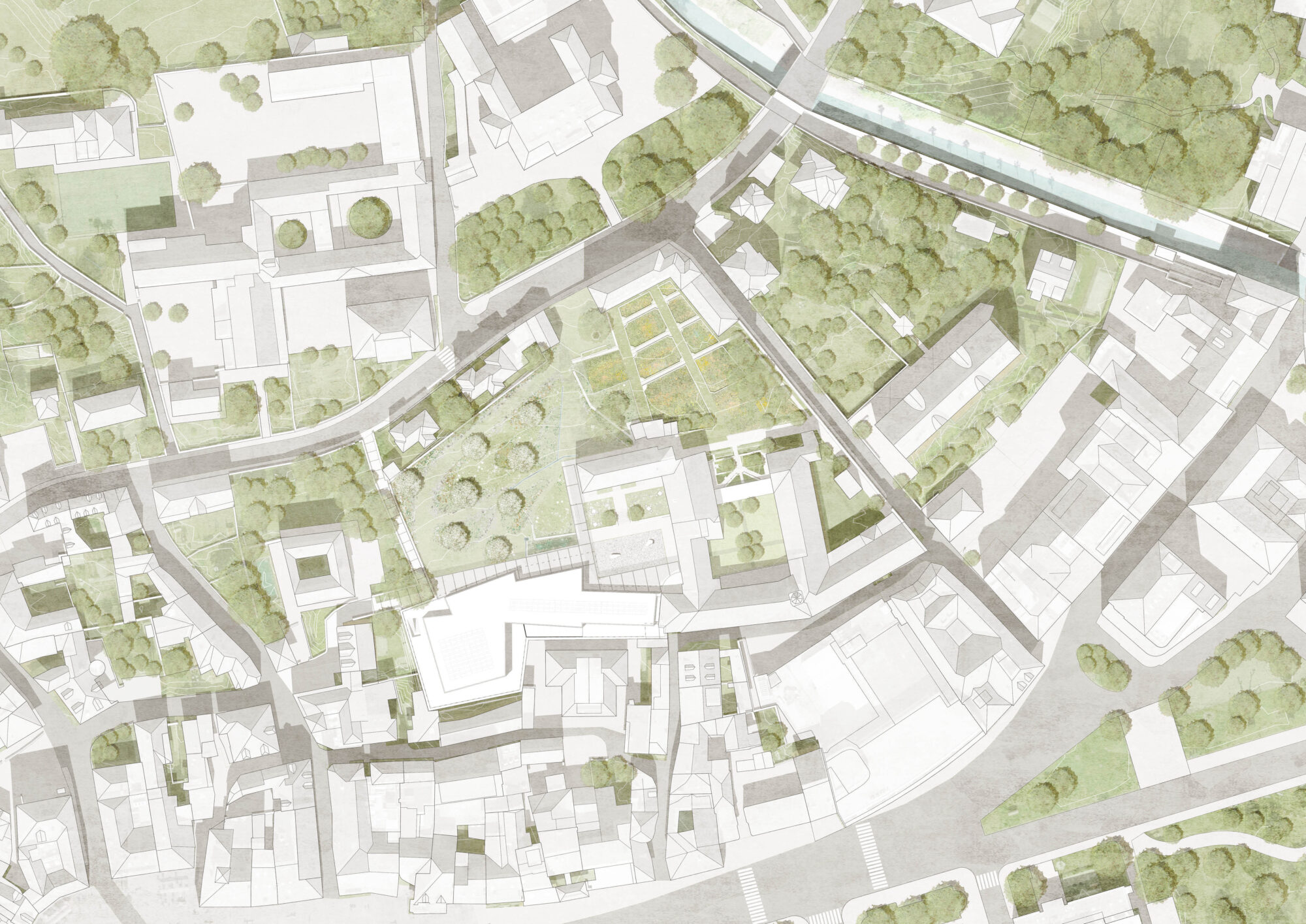
In the spirit of an orchard, a new grid of fruit trees is being planted atop a “Sukzessiongarten.” A continuous green canopy reinforces the existing topography and creates subtle variations through different combinations of gravel and humus: the higher proportion of gravel forms a network of paths that allows visitors to traverse the vegetable garden, supporting access for heavy vehicles, all within the continuity of a meadow where perennials alternate with native grasses. The varied mowing of the lawns during the summer allows visitors to enjoy the site, creating gathering spots within a bucolic landscape.
The nuns’ garden is also being restored in a conservative manner, reclaiming its function as a vegetable garden. Transformed using permaculture principles, it allows for the cultivation of vegetables and native plants that promote biodiversity. By producing local fruits and vegetables, the nuns’ orchard and vegetable garden is able to regain their original purpose: ensuring self-sufficiency. Furthermore, they are able to supply the new restaurant-café with their produce, working in synergy with its chefs (farm-to-table). A small entrance plaza off Via Cappuccini provides access to the park.
The passage between the Ortaglia and the nuns’ garden consists of a series of interconnected spaces flanked by the existing water channels. It is here, in the shade of the restaurant, that you can dine outdoors on the hottest days. Finally, the two existing terraces that extend into the vegetable garden are preserved: the upper terrace, the only flat, green resting area on the sloping terrain, and the lower terrace, which collects rainwater and serves as a valuable transitional space between the park and the new cloister, populated by aquatic plants.